Most creators don’t struggle with ideas.
They struggle with identity.
That’s why copying viral formats feels tempting.
It works fast.
It gives likes.
It gives validation.
But it slowly kills the one thing a personal brand needs to survive long-term: distinctiveness.
Let’s break this down properly.
The Illusion of Virality
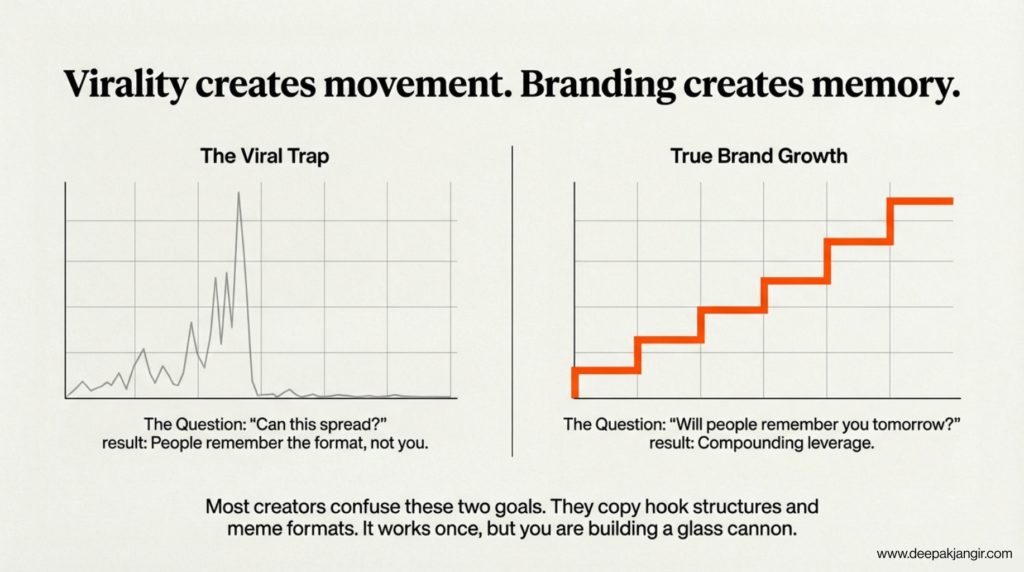
Virality creates movement, not memory.
A viral post answers only one question:
“Can this spread?”
A personal brand answers a very different one:
“Will people remember you tomorrow?”
Most creators confuse these two.
They copy:
- Hook structures
- Visual styles
- One-liners
- Carousels
- Meme formats
And yes, it works once.
But then something interesting happens:
People remember the format, not the creator.
That’s the trap.
Why Copying Formats Destroys Brand Value
1. It Removes You From the Content
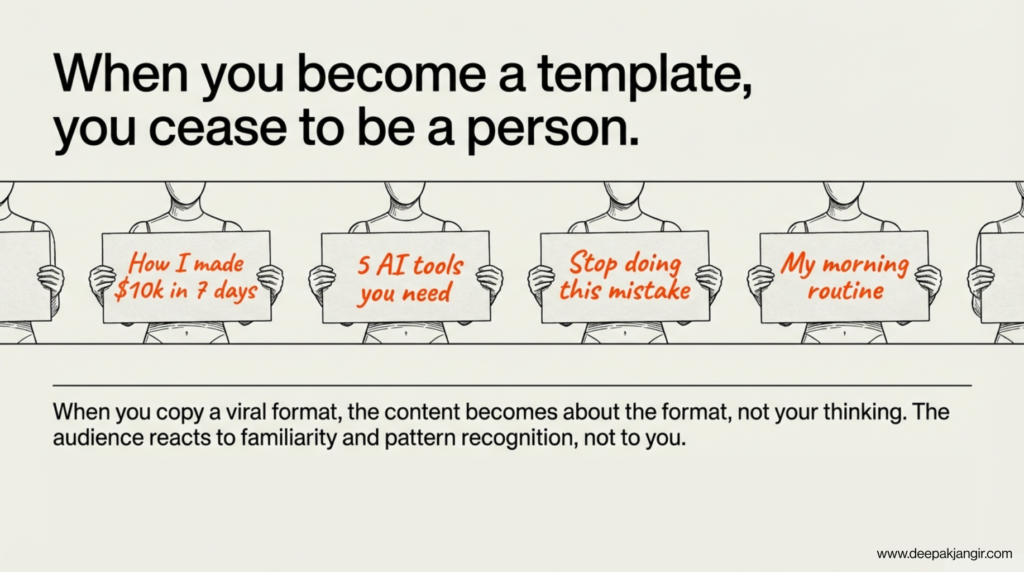
When you copy a viral format, the content becomes about the format, not your thinking.
The audience reacts to:
- Familiarity
- Pattern recognition
Not to you.
If your content can be reposted by 50 other people without losing meaning, you don’t have a brand, you have a template.
2. It Trains the Algorithm (and People) Wrong
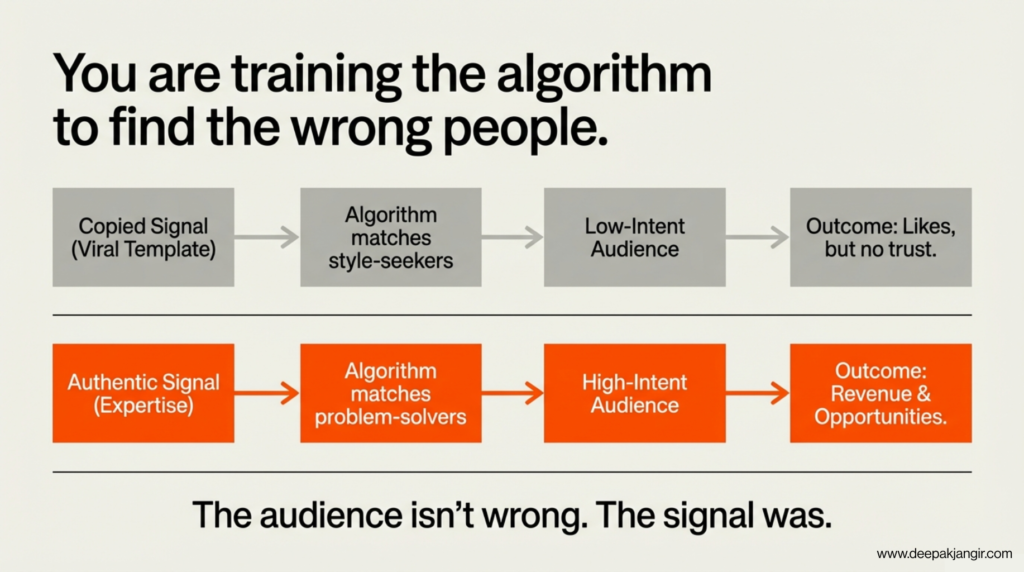
Algorithms learn who to show your content to.
When you post copied formats:
- You attract people who like that style
- Not people who care about your expertise
So you grow an audience that:
- Likes the post
- Doesn’t trust your opinion
- Never converts into opportunities
This is why many creators grow followers but feel “stuck.”
The audience isn’t wrong.
The signal was.
3. It Destroys Trust Without You Noticing
Trust isn’t built by clever hooks.
Trust is built by clear thinking over time.
When your content keeps changing tone, style, and structure based on trends:
- You look inconsistent
- Your thinking feels shallow
- Your opinions feel borrowed
People may engage.
But they won’t rely on you.
And reliance is where money, referrals, and authority come from.
4. Virality Optimizes for Emotion, Not Insight
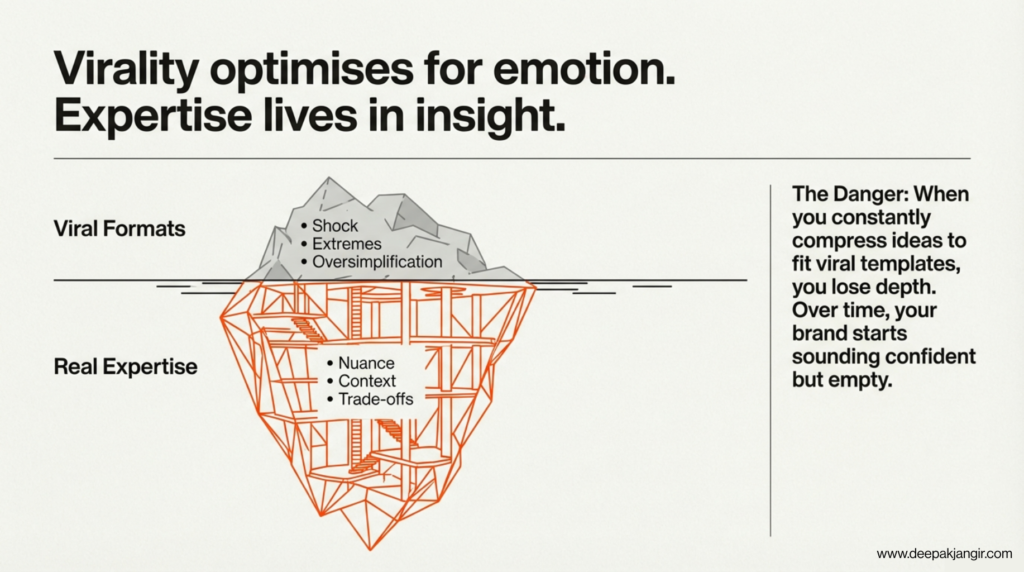
Viral formats usually rely on:
- Shock
- Extremes
- Oversimplification
But real expertise lives in:
- Nuance
- Context
- Trade-offs
When you constantly compress ideas to fit viral templates, you lose depth.
Over time, your brand starts sounding confident but empty.
That’s dangerous.
The Question Every Creator Should Ask
Instead of asking:
“Will this perform?”
Ask:
“What does this teach people about how I think?”
If your content doesn’t make your thinking clearer, it’s not building a brand.
What Works Better Than Viral Formats
1. Experience-Based Content
Talk about:
- What you tried
- What failed
- What surprised you
- What actually worked
Even simple observations beat polished virality.
Why?
Because experience can’t be copied.
2. Pattern Recognition
Authority comes from noticing patterns others miss.
Example:
- “Every creator stuck at 5–10k followers makes the same mistake.”
- “Most brands fail not because of content, but because of positioning.”
Patterns signal depth.
Depth builds trust.
3. Consistent Point of View
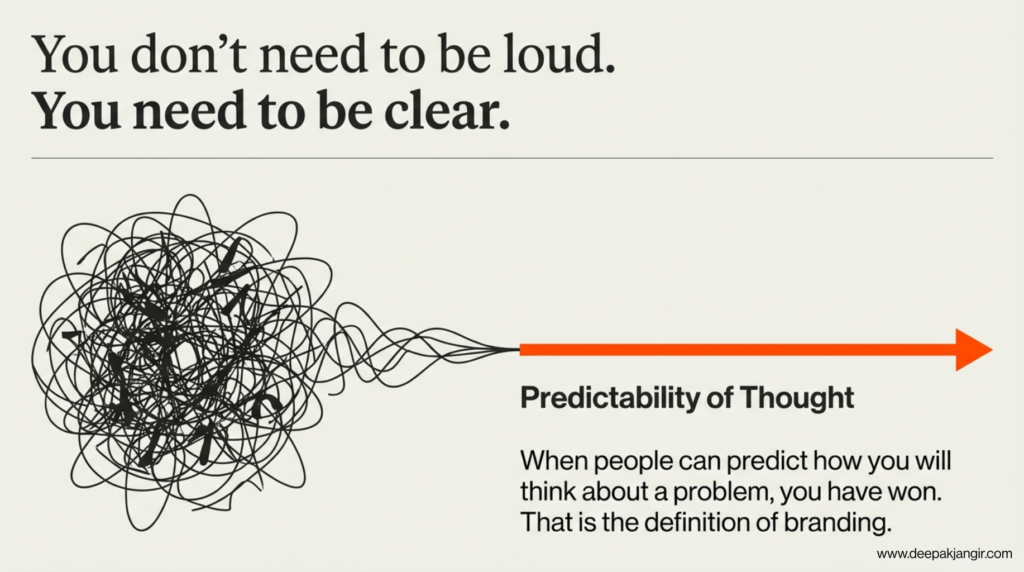
You don’t need to be loud.
You need to be clear.
When people can predict how you’ll think about a problem, you’ve won.
That’s branding.
A Simple Rule Going Forward
Before posting, ask yourself:
“If someone reads 5 of my posts back-to-back, will they understand what I stand for?”
If the answer is no, stop copying formats.
Final Thought
Virality gives you attention.
Personal brands give you leverage.
Attention fades.
Leverage compounds.
Choose accordingly.
