Most creators think they need better content.
Better hooks.
Better formats.
More consistency.
So they post more, tweak captions, follow trends, and still don’t grow.
That’s because content was never the real issue.
The Real Problem Most People Miss
Content doesn’t fail because it’s bad.
It fails because it’s unclear.
When someone sees your post, they subconsciously ask:
- Who is this for?
- What does this person stand for?
- Why should I listen to them on this topic?
If those answers aren’t obvious, the content dies, no matter how well it’s written.
That’s not a content problem.
That’s a positioning problem.
Why Posting More Doesn’t Fix It
Most creators respond to low engagement by increasing output.
More posts.
More formats.
More effort.
But volume only amplifies what already exists.
If your positioning is unclear, posting more just spreads confusion faster.
This is why some creators post daily for months and still feel invisible.
Not because they’re untalented, but because the audience doesn’t get them.
What Positioning Actually Means (In Simple Terms)
Positioning is the answer to one question:
“Why should someone follow you instead of anyone else?”
It’s not your bio.
It’s not your niche label.
It’s the mental shortcut people use to place you in their head.
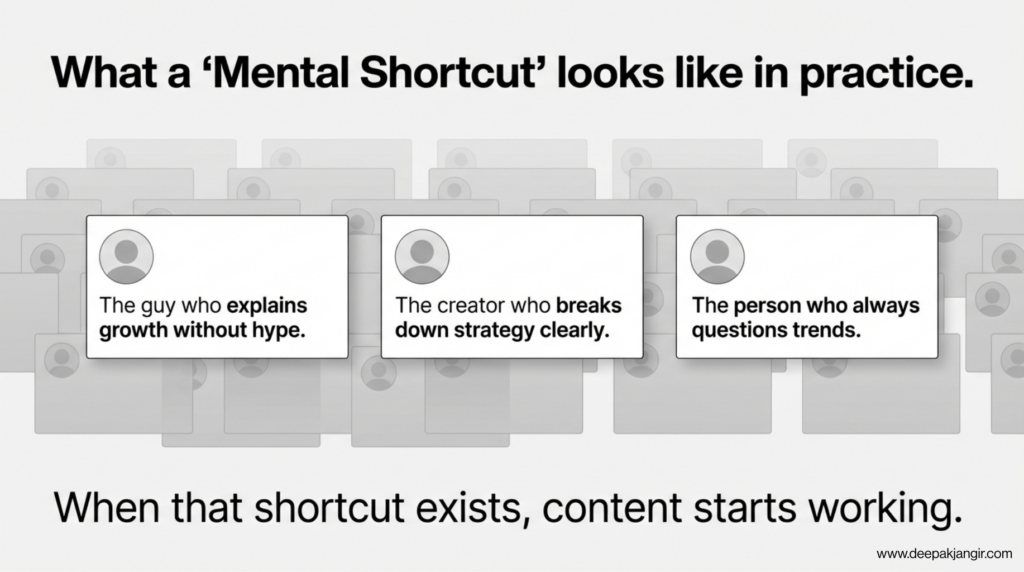
When that shortcut exists, content starts working.
When it doesn’t, even great posts struggle.
Why Good Content Still Fails Without Positioning
You can write smart posts and still fail if:
- Your audience isn’t defined
- Your promise is vague
- Your point of view keeps changing
In that case, people may like a post, but they won’t remember you.
And if you’re not remembered, growth stalls.
Content vs Positioning (The Relationship Most Get Wrong)
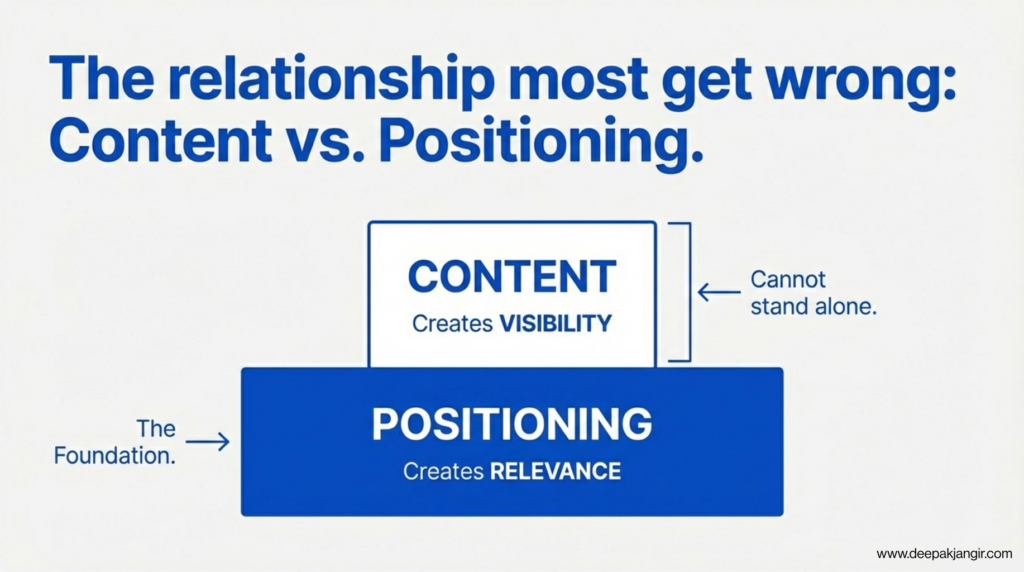
Here’s the simple truth:
Positioning creates relevance.
Content creates visibility.
Content cannot create relevance on its own.
That’s why copying viral formats feels productive, but doesn’t compound.
You borrow attention without building identity.
A Simple Test You Can Run Today
Before posting, ask:
If someone reads 5 of my posts back-to-back:
- Will they understand what I’m about?
- Will they know who I help?
- Will they recognize how I think?
If the answer is no, don’t fix the content.
Fix the positioning.
What to Focus on Instead of “More Content”
- Be clear about who you’re talking to
- Be consistent in what you question or stand for
- Repeat your core ideas without changing your voice
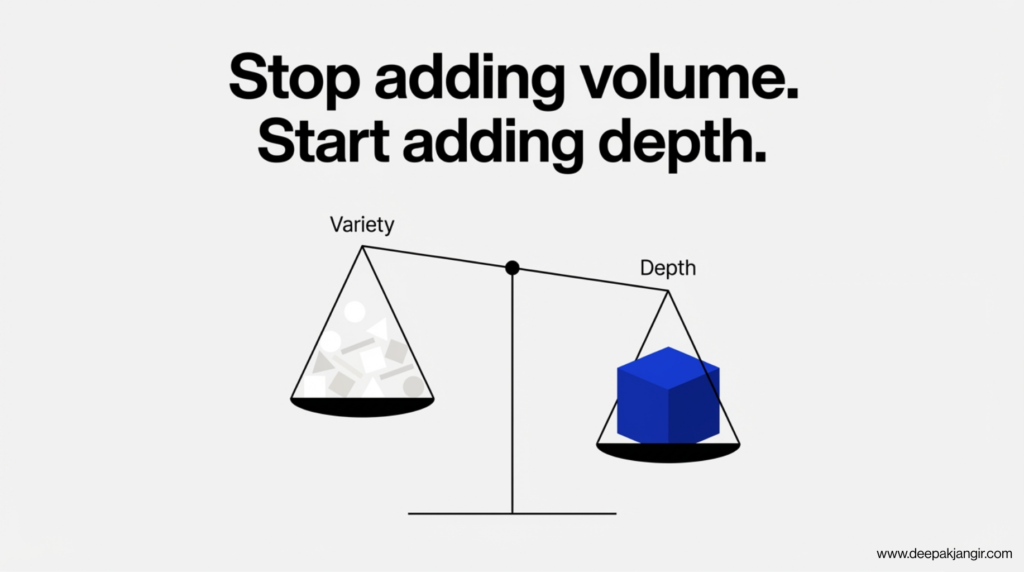
- Let depth replace variety
When positioning is right, even simple posts perform.
Final Thought
Most people don’t need better content.
They need clearer thinking.
Once positioning is sharp, content stops feeling forced, and starts working the way it should.
